Welcome back, landscape enthusiasts, to FreePaintingTutorials.com!
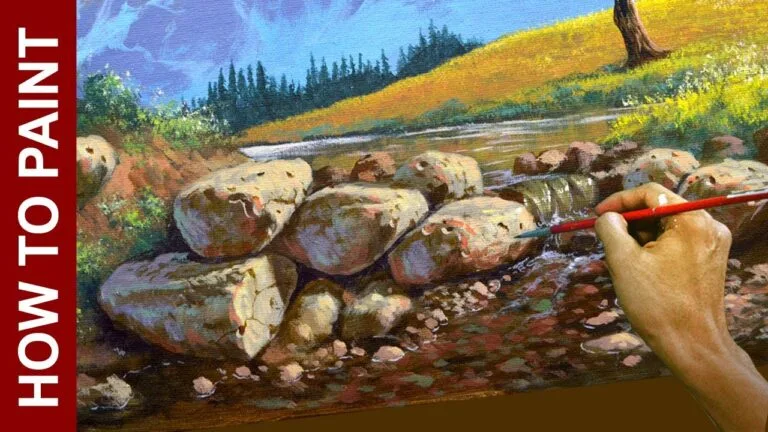
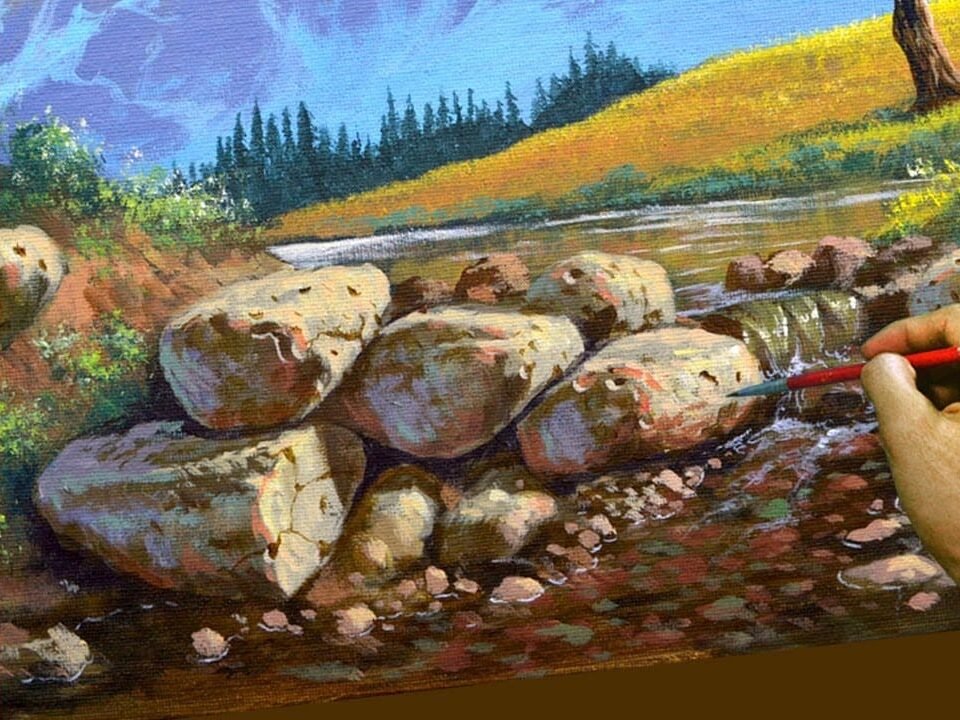
Have you ever found your painted rocks looking more like blobs than solid, textured stone? Today, we’re cutting through the confusion and unlocking the step-by-step secret to creating realistic depth and convincing texture in your geological elements. This tutorial is your masterclass in learning how to paint realistic rocks that look firmly settled in the cool, shallow water of a stream.
We are dedicating the next approximately 38 minutes to focusing purely on form, shadow, and texture, moving beyond simple gray masses. By the end, you'll know exactly how to paint realistic rocks that enhance any landscape scene.
Let's get started with your supplies!
🖌️ Supplies You'll Need
Achieving the rough, gritty texture of rock and the subtle color shifts of shadows requires precise tools and a specific color palette.
Acrylic Paint Colors
We'll focus on neutral, earthen tones and specific cool colors for shadows (violet/blue).
Titanium White (Essential for highlights and mixing lighter tones)
Phthalo Blue / Ultramarine Blue / Primary Blue (For mixing cool shadows and water)
Brilliant Red / Primary Red / Cadmium Red (Used to mix a violet/purple shadow tone)
Medium Yellow / Primary Yellow (For slight warmth or mixing greens if foliage is added)
Raw Umber / Burnt Umber / Burnt Sienna (The primary colors for rock texture and earth)
Pencil, water, palette, and plenty of paper towels (essential for dry-brushing rock texture).
Step-by-Step Tutorial: How to Paint Realistic Rocks
The key to painting convincing rock texture lies not in the color, but in the value shifts (lightness/darkness) and edge quality (sharp vs. soft).
1. Line Sketching for Rocks
Before placing the first layer of paint, map out your composition.
Shape Variation: Sketch irregular, angular, and non-uniform shapes. Avoid perfect circles or squares. Rocks are defined by broken, complex planes.
Underpainting Block-In: Using your smaller #3 nylon flat brush and a thin wash of light Raw Umber mixed with water, quickly block in the general shape of all the main rocks. This light color serves as the initial mid-tone for the entire rock structure, covering the white canvas and immediately giving you a base to apply shadows and highlights against.
2. Adding Darker Shades
To make the rocks look three-dimensional, we must first establish the areas where light cannot reach.
Shadow Color Mix: Mix a rich, cool shadow tone using Phthalo Blue or Ultramarine Blue mixed with Brilliant Red to create a deep violet, then neutralize it slightly with Raw Umber. This creates a complex, convincing shadow color.
Application: Use the Number 7 or 8 flat brush to apply this dark shadow mix in between rocks and along the planes that face away from your light source. This darkness is what defines the separation and weight of the rocks.
Wet vs. Dry: Keep the paint thick for intense shadows, but if you want a softer transition between the rocks, gently feather the edges with a clean, dry brush while the paint is still wet.
3. Adding the Rock Highlights
Now that the shadows have carved out the form, we introduce light to bring the rocks forward.
Highlight Mix: Using light Raw Umber (Raw Umber + plenty of Titanium White), apply this color to the planes of the rocks that are directly facing your imaginary sun.
Directional Strokes: Use a dry-brush technique: load your Number 8 Flat Brush, wipe almost all the paint off, and gently drag the brush along the rock surfaces. The dry, sparse paint will catch the canvas weave, mimicking the gritty, rough texture of the stone.
Edge Control: Keep the edges of these highlights crisp and defined. The sharp contrast between the deep shadow (Step 2) and this bright highlight is the primary technique for how to paint realistic rocks.
4. Adding Purple Shades on Darker Area
We enhance the illusion of rock embedded in water by refining the shadow colors.
Shadow Refinement: Revisit the darkest shadow areas, particularly where the rock surfaces curve inward, or where they meet the water line. Add pure violet (mixed from blue and red) or a deep gray-violet to these areas. This cool, desaturated color reinforces the idea that the deepest parts are cool, damp, and recessed.
Submerged Rocks: If you have any rocks partially submerged, apply a thin, diluted layer of your deepest shadow color over them. This simple step makes the rocks look like they are under the water rather than floating on top.
5. Adding Fine Details, Such as Cracks, Holes
The final layer of detail is what truly sells the realism of the texture.
Cracks: Using your smaller liner brush (No. 0) and your darkest shadow color (Raw Umber + Violet), paint thin, broken lines that suggest cracks or fissures running through the rock planes. Make sure these lines follow the plane of the rock.
Holes and Imperfections: Use the liner brush and dark paint to place small, irregular dots or dashes to represent holes and chips. Immediately dab a tiny, sharp spot of Titanium White directly next to the dark spot on the side facing the light source. This tiny highlight/shadow contrast gives the illusion of a small, deep imperfection.
6. Finishing by Adding Smaller Rocks Beside the Stream
Complete the scene by integrating the rocks into the water and streambed.
Adding Streams and Small Rocks: Block in the main color of the water using light, cool blues and greens, blending them softly. Add smaller, secondary rocks in the stream using the same layering technique, but make their edges softer and their colors slightly lighter/cooler to suggest the water refraction.
The Water Line: Using a clean flat brush and a very thin wash of clear water/white, paint a sharp, thin horizontal line where the water meets the rock. This line represents the meniscus (the slight curvature of water around an object) and is a tiny but vital detail for realism.
Congratulations!
You've successfully completed this focused tutorial! You now know the essential techniques to paint realistic rocks with depth, texture, and environmental context. This is a foundational skill that will elevate all your landscape paintings.
Expand Your Painting Skills!
Ready to tackle your next masterpiece? We have dozens more in-depth acrylic painting tutorials waiting for you!
Would you like me to draft your next 1,000-word tutorial, perhaps focusing on the complementary technique of painting realistic water refraction or foaming waterfalls?


Połowa w dół ok Góra nie pasuje do reszty
So much realistic rocks ! So much talent ! 👍🙏💖
Thank you for your tutorials!
Thank you for watching! 🥰
Now i can mix colors because of you… i just followed all your instructions in your video… im so happy
That's awesome, I'm glad you're enjoying the process and learning! 😊
Sensacional...
Obrigado! 🥰